Category: Quotes

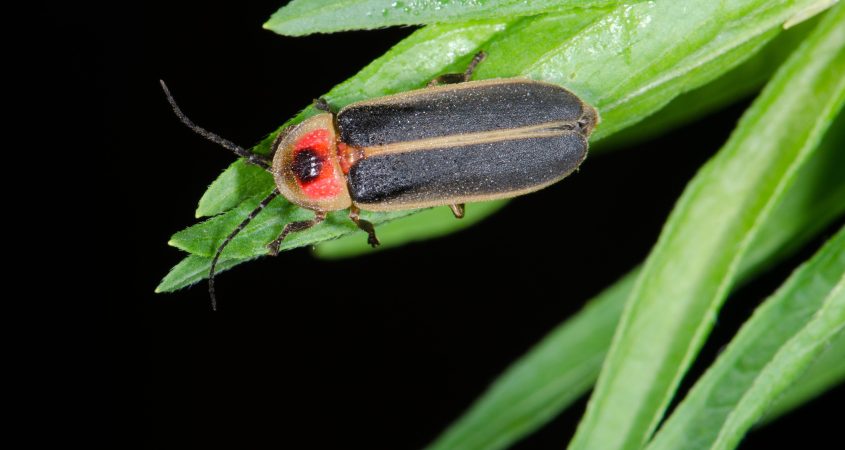
Fireflies

I’m lucky to have spent my childhood summers among woods, streams, meadows, and marshes, but most suburbanites have never searched for frogs’ eggs, caught fireflies in a jar, or peeked into a grassy nest of adorable baby mice. As the years pass, fewer and fewer people will long for the call of bullfrogs. Today’s children, growing up on lawns and pavements, will not even have nostalgia to guide them, and soon the animals will be not only missing but forgotten.

Sara SteinNoah’s Garden

Returning Natives

Changing the plant base of all of suburbia is quite an undertaking but all you have to worry about is your eighth of an acre. Planting the back and side borders of your lot will provide more habitat than you might think, especially if you can get your neighbor to do the same. If your plantings are 15 feet wide, and your neighbor’s border plantings are also 15 feet wide, together you have created a 30-foot swath of habitat for the length of your yard, as well as a privacy screen that can enhance the value of your property. The important thing to remember is that even if you seem like the only one in all of North American who uses more natives than aliens, wildlife will be better off for your efforts. The effects will be cumulative, and probably synergistic, as more and more people join you. And don’t forget that plants are long-lived. The white oak you plant tomorrow could easily live 300 years, servicing innumerable insects, birds, squirrels, mice, raccoons, and deer every year of its life. Yes, you can make a difference on a small plot of land. You can even make a difference if you own no land. If you live in an apartment, you may be able to influence the landscaping habits of your landlord, or the company you work for, or the township supervisors who control your city parks, or your sibling who does own property. If we humans are capable of turning hundreds of millions of acres of rainforest into depleted grasslands, and extirpating millions of buffalo from the plains, and billions of passenger pigeons from the skies and cod from the North Atlantic, we are also capable of returning natives to our gardens.

Douglas Tallamy–Bringing Nature Home

Nectar Guides

What we see as a plain white or yellow bloom is revealed to a bee as a complex diagram complete with lines and patches that serve as landing guides to efficiently move bees to nectar and pollen. Some overly hybridized flowers bred for human purposes and not insects’ abilities can be very confusing to six-legged visitors. I have watched a honey bee stagger aimlessly on a florist’s lily. What to me was a lovely pattern of white, yellow and pink spotting on an ivory background was incomprehensible to the bee. It was as if someone had pulled out all the street signs and rearranged them randomly, and the bee could find no guidance to the nectar in the flower’s throat.

William Cullina–Flowers with a touch of the blues (WilliamCullina.com)

Aerial Dance

Have you ever observed a humming-bird moving about in an aerial dance among the flowers— a living prismatic gem. … it is a creature of such fairy-like loveliness as to mock all description.

W. H. Hudson–Green Mansions

Gorgeous Diversity

We may differ about whether the universe was made by fiat, or by the laws of nature, but on this point we are in profound accord:  the Earth—with its gorgeous diversity of habitats and beings—belongs, if it belongs to any of us, to our children and their children and on into the distant future. It is not ours to squander.

Carl Sagan

That Last Climb

After weeks of intensive care, my little friends have taken to the skies now. One by one, off into the vault of blue autumn skies, peering down at brightly colored trees, cities, meadows, forests, and lakes, the wind on their wings. They are feeling freedom that I could never imagine. For me, sort of like a mother with an empty nest now, I can only hope and ask the universe for their safe passage to their destination.

It seems like yesterday that they were just little white dots on some decaying leaves in a Petri dish. I watched them in their mighty struggles with empathy and concern. I labored in their service gladly. In the spirit of poetic license I assign to them human qualities, such as bravery, tenacity, miraculous, mystical, and spectacular.

I am especially impressed with the caterpillars and what seems to me like a huge leap of faith and acceptance of fate when they go for that last climb to let the mystery happen. We can learn a lot from them, especially at my age, observing how willingly they submit to their fate, perhaps somehow knowing that it is not really the end but the beginning of a great adventure.

Some will say they are but little automatons blindly going through their assigned behaviors but in my heart I think they are much greater than that.

Jan LeVesqueMonarch Watch DPLEX listserv

Get Outside

Reconnecting our children with nature in their everyday lives is the first step in an environmental education. That means getting children outside into the world to experience it first-hand, rather than through TVs, computers or on YouTube. I’m not saying that there isn’t a place for technology to help us understand the world. …But as fascinating as it is, nothing can replace the real experiences we have outdoors, peering through a telescope into the night sky. Or digging in a garden. Or exploring a swamp, a forest or a tide pool. … We have to get our kids outside more to play and explore the wonders of nature, so that they will come to understand it better. This isn’t just up to kids or teachers. It’s up to parents. It’s up to school boards. It’s up to all of us to ensure that we’re not telling our children one thing and doing another. Anything else and we’re not just lying to them. We’re lying to ourselves.

David Suzuki

Modest Increases

In the past we have not designed gardens that play a critical ecological role in the landscape, but we must do so in the future. The importance of our doing this cannot be overstated. We need to quickly replace unnecessary lawn with densely planted woodlots in the East and West, and natural prairies in the Midwest; whatever can serve as habitat for our local biodiversity. Homeowners can do this by planting the borders of their properties with plants native to their region: In the East, native trees such as white oaks (Quercus alba), black willows (Salix nigra), red maples (Acer rubrum), green ashes (Fraxinus pennsylvanica), black walnuts (Juglans nigra), river birches (Betula nigra) and shagbark hickories (Carya ovata), under-planted with woodies like serviceberry (Amelanchier canadensis), arrowwood (Viburnum dentatum), hazelnut (Corylus americanus), and blueberries (Vaccinium spp). Our studies have shown that even modest increases in the native plant cover on suburban properties significantly increases the number and species of breeding birds, including birds of conservation concern.

Doug Tallamy–Article Published in Wild Ones Journal

Pollinator Decline

Four factors—the loss and fragmentation of habitat, the degradation of remaining habitat, pesticide poisoning, and the spread of diseases and parasites—account for most of the declines in populations of bees and other pollinators. These factors have complex political, economic, and social origins that are not easily addressed. At the local level, however, the solutions to many of these problems are simple and straightforward. Many insects are fairly resilient, and there are actions we can take in our own backyards and neighborhoods, on farms and ranches, and in city parks and wild areas, to help strengthen and support pollinator populations.

Xerces Society–Attracting Native Pollinators

The Same Life

“The same stream of life that runs through my veins night and day runs through the world and dances in rhythmic measures. It is the same life that shoots in joy through the dust of the earth in numberless blades of grass and breaks into tumultuous waves of leaves and flowers. It is the same life that is rocked in the ocean-cradle of birth and of death, in ebb and in flow. I feel my limbs are made glorious by the touch of this world of life. And my pride is from the life-throb of ages dancing in my blood this moment.”

Rabindranath Tagore