Category: Quotes

New Landscape

We don’t have to—indeed, we neither can nor should—each provide all habitats, every sort of food. You plant nut treees and I’ll plant spruce, you keep a berry thicket and I’ll do the tall grass, or the bog, the woodlot, the crowds of fruiting shrubs and beds of wildflowers. But let us weave them together into something big enough to matter by connecting each patch with others at the corners and along the boundaries. This is the rich, new landscape; this is the new kind of gardener who asks not whether he should plant this ornament or another but which patch is missing from his community, how he can provide it, and how animals will move from his patch to the next.

This is the ark.

Sara SteinNoah’s Garden: Restoring the Ecology of Our Own Back Yards
Our Hubris

Lately we have begun to recognize that we are poisoning ourselves with our lawns, which receive, on average, more pesticide and herbicide per acre than just about any crop grown in this country. Suits fly against the national lawn-care companies, and interest is kindled in “organic” methods of lawn care. But the problem is larger than this.

Lawns, I am convinced, are a symptom of, and a metaphor for, our skewed relationship to the land. They teach us that, with the help of petrochemicals and technology, we can bend nature to our will. Lawns stoke our hubris with regard to the land.

What is the alternative? To turn them into gardens. I’m not suggesting that there is no place for lawns in these gardens or that gardens by themselves will right our relationship to the land, but the habits of thought they foster can take us some way in that direction.

Michael Pollan–Why Mow? The Case Against Lawns, The New York Times Magazine, May 28, 1989

The Easy Part

The easiest part of the gardening year, at least for many of us, is winter. There are books on winter gardening, and I politely chose to ignore them altogether. There is little I can or want to do in my freezing garden between November and March. All the same, a good garden should provide shelter for all overwintering insects. A good basic design might interweave the entire garden with dwarf conifers and evergreen shrubs… These plants provide numerous protected places such as twigs and dead leaves on the ground to serve as overwintering sites for all those insects we so desperately want to keep in our gardens. And we especially need to have the predators and parasitoids ready to spring forth to feast on all the plant-feeding insects. The worst possible scenario we gardeners create with our bare-earth policy is that of decoupling the predators and parasitoids from their prey. We don’t want to race into gardening season having to battle the tides of imbalance, there is enough to do already.

Eric Grissell–Insects and Gardens: In Pursuit of a Garden Ecology

Berries

Plants that bear fruit in the summer generally dole their berries out as though by prior agreement, sharing the planting season so that each gets its turn and customers are fed from June through August. Each speaks to the locals who have time to learn where and when to find it. Raspberries, like strawberries, waft a fragrance. Blueberries and serviceberries speak in three colors. Green fruits are toxic and not yet nourishing. A rosy blush signals impending ripeness (resident animals monitor blushing berries like children watch cookies browning in the oven). The blue ones say “Eat me” very clearly. We don’t have to attend to these details. It’s like buying groceries once and watching meals prepare themselves for years.

Sara Stein–Noah’s Garden: Restoring the Ecology of Our Back Yards

Yellow Vitamin

In the rain forest, no niche lies unused. No emptiness goes unfilled. No gasp of sunlight goes untrapped. In a million vest pockets, a million life-forms quietly tick. No other place on earth feels so lush. Sometimes we picture it as an echo of the original Garden of Eden—a realm ancient, serene, and fertile, where pythons slither and jaguars lope. But it is mainly a world of cunning and savage trees. Truant plants will not survive. The meek inherit nothing. Light is a thick yellow vitamin they would kill for, and they do. One of the first truths one learns in the rain forest is that there is nothing fainthearted or wimpy about plants.

Diane Ackerman–The Rarest of the Rare: Vanishing Animals, Timeless Worlds

Our Lifeline

I saw that animals were important. I saw that plants were even more important. I was also to learn that compared to many of the other species, we weren’t important at all except for the damage we do. We do not rule the natural world, despite our conspicuous position in it. On the contrary, it is our lifeline, and we do well to try to understand its rules.

Elizabeth Marshall Thomas–The Hidden Life of Deer: Lessons from the Natural World


Variety

To such an extent does nature delight and abound in variety that among her trees there is not one plant to be found which is exactly like another; and not only among the plants, but among the boughs, the leaves and the fruits, you will not find one which is exactly similar to another.

Leonardo da Vinci

Wild Pollinators

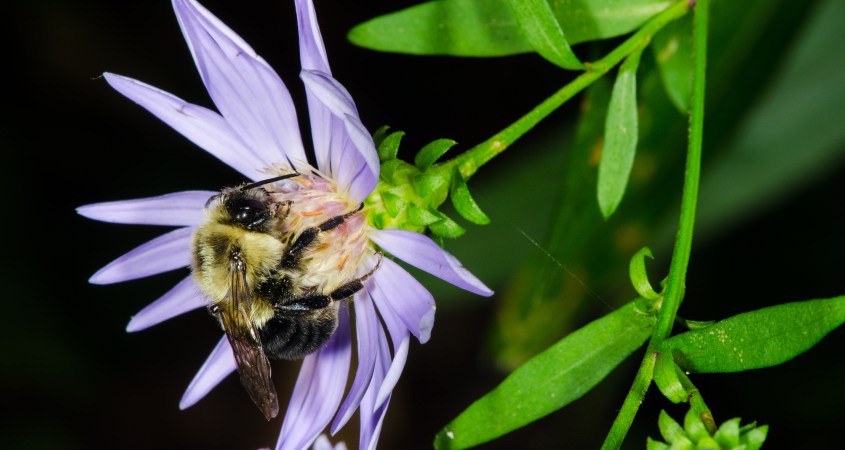
Man is more dependent on these wild pollinators than he usually realizes… Without insect pollination, most of the soil-holding and soil-enriching plants of uncultivated areas would die out, and with far reaching consequences to the ecology of the whole region. Many herbs, shrubs, and trees of forests and range depend on native insects for their reproduction; without these plants many wild animals and range stock would find little food. Now clean cultivation and the chemical destruction of hedgerows and weeds are eliminating the last sanctuaries of these pollinating insects and breaking the threads that bind life to life.

Rachel Carson–Silent Spring

Vital Organ

Think of the tree as the Earth’s breathing apparatus, an organ that helps regulate the planet’s atmosphere by exhaling fresh oxygen and inhaling the carbon that animals, decay, and civilization spew into it. The tree, under this new description, is not merely a member of the local forest ecosystem (where we’ve known for some time that it exerts considerable influence on the local life, soil, and even climate); it’s also a vital organ in a global system more intricate and interdependent than we ever realized. The Earth may not be a spaceship but an organism, and the trees may be its lungs.

Michael Pollan–Second Nature: A Gardener’s Education

Predators

The insects and their actions and reactions are the garden’s backbone. As many insects quietly go about their business of clearing broken bits of plants from the soil’s surface, decomposing dead material, incorporating organic matter into the soil, dispersing animal droppings, gathering nectar, pollinating plants, chewing on leaves and flowers, and serving as dinner for birds and bats, another hoard of insects—the predators and parasitoids—are doing their best to find every last one and kill them. Such is life.

Eric Grissell–Insects and Gardens: In Pursuit of a Garden Ecology